
Most Dangerous Roads in the Puget Sound
Why Certain Puget Sound Roads Deserve Extra Attention
The Puget Sound region contains some of the most heavily traveled and complex roadways in Washington State. Between commuter congestion, freight corridors, variable weather, and aging infrastructure, certain roads consistently present higher crash and injury risks than others.
While most drivers recognize these roads by experience, few understand:
- Why accidents happen more frequently there
- How roadway design and traffic patterns contribute to collisions
- What these factors mean if an injury claim becomes necessary
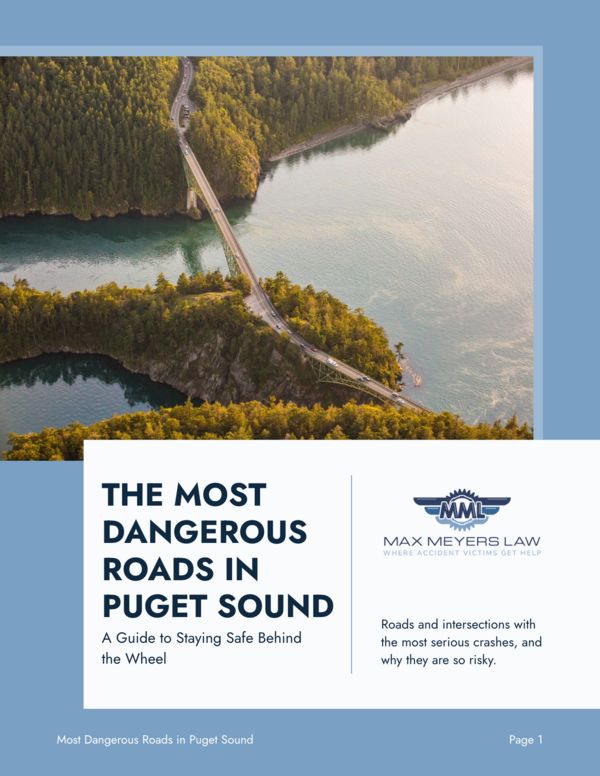
This page provides a high-level overview of roadway risk across Puget Sound and directs drivers to a comprehensive, data-driven guide for deeper insight.
Get Your Free E-Book Today!
What Makes a Road “Dangerous” in Washington?
A road doesn’t need to look hazardous to carry elevated risk. In Washington, dangerous roadways often share characteristics such as:
- High traffic volume and congestion
- Complex merging or interchange design
- Speed transitions between zones
- Limited visibility or shoulder space
- Frequent exposure to wet or low-light conditions
These factors not only increase accident likelihood — they can also complicate fault and insurance determinations after a crash.
High-Risk Corridors Across the Puget Sound Region
Across King and Snohomish counties, certain highways and surface roads appear repeatedly in accident reports and injury claims. These include:
- Major interstate corridors connecting Seattle, Everett, and the Eastside
- State routes carrying both local and commuter traffic
- Urban arterials with high pedestrian and cyclist exposure
Each roadway presents unique risk patterns, from chain-reaction crashes to severe injury outcomes at relatively moderate speeds.
For a detailed breakdown of specific roads, accident trends, and safety considerations, explore our full guide:
👉 View the Full Guide: Most Dangerous Roads in Puget Sound
Why Roadway Risk Matters After an Accident
In Washington, accident claims are rarely evaluated in isolation. Insurance companies consider:
- Traffic flow and congestion at the crash location
- Whether the roadway has known risk characteristics
- How predictable (or unavoidable) the collision may have been
- Whether multiple drivers may share partial responsibility
Understanding the environment where a crash occurred can make a meaningful difference in how a claim is handled.
Roadway Risk and Washington Injury Law (At a Glance)
Washington uses a comparative negligence system, meaning fault can be shared among multiple parties. On high-risk roads, insurers often argue that:
- Traffic conditions were the primary cause
- Driver behavior was influenced by congestion
- No single party is fully responsible
This makes context critical — and why detailed roadway knowledge matters when injuries are involved.
When to Look Deeper Than a Surface Explanation
Many drivers search for dangerous roads out of curiosity or caution. Others are looking for answers after a serious accident.
You may want more detailed information if:
- Your crash happened on a major highway or arterial
- Fault is being disputed
- Injuries appeared days after the accident
- An insurance company is pushing for a fast settlement
Our guide dives into specific roads, risk factors, and real-world implications drivers won’t find in general traffic summaries.
👉 View the Full Guide: Most Dangerous Roads in Puget Sound
Local Representation for High-Risk Roadway Injuries
Crashes on major Puget Sound roads often involve:
- Multiple jurisdictions
- State and local traffic patterns
- Complex insurance negotiations
If your accident occurred near Bothell or Kirkland, understanding how these roadway risks intersect with Washington injury law is essential.
Learn more here: